 Hi readers, it seems you use Catholic Online a lot; that's great! It's a little awkward to ask, but we need your help. If you have already donated, we sincerely thank you. We're not salespeople, but we depend on donations averaging $14.76 and fewer than 1% of readers give. If you donate just $5.00, the price of your coffee, Catholic Online School could keep thriving. Thank you. Help Now >
Mardi Gras/Fat Tuesday and the Catholic Church
Tuesday February 13th, 2024
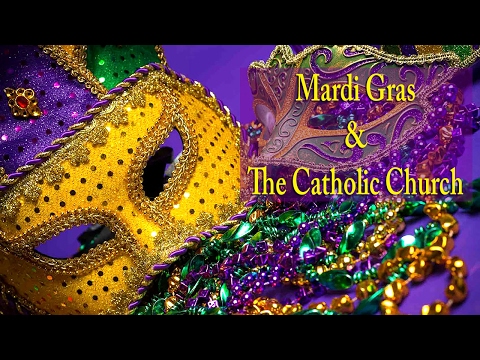
 Mardi Gras is strongly associated with wild bacchanalia and debauchery, but the original intent of the holiday and how it's kept by the faithful is much different. Fat Tuesday, as it is known in English, is a long-standing tradition of the Catholic Church and it marks the last day of ordinary time before the start of Lent, a time of fasting and repentance. While the parties in Europe, South America, and parts of the United States have gained the most attention in popular culture, they seriously misrepresent and outright eclipse the Catholic intent of the holiday.
According to historians, the celebration of Mardi Gras has its roots in the pagan Roman celebration of Lupercalia. This was a February holiday and it honored the Roman god of fertility. It involved feasting, drinking, and carnal behavior.
However, with the rise of the Church in ancient Rome, Christian teaching and morals took root, but there always remained a strong need to blend ancient Roman traditional practices with the growing Christian faith. The blending of tradition with new religious beliefs was a common practice in the ancient world and it helped people to transition away from paganism. In fact, there are a number of ancient Roman traditions that persevere in the Roman Catholic Church to this day, where they continue to guide the faithful.
We ask you, humbly: don't scroll away.
Hi readers, it seems you use Catholic Online a lot; that's great! It's a little awkward to ask, but we need your help. If you have already donated, we sincerely thank you. We're not salespeople, but we depend on donations averaging $14.76 and fewer than 1% of readers give. If you donate just $5.00, the price of your coffee, Catholic Online School could keep thriving. Thank you.Help Now >
As Catholic Christianity spread throughout Europe during the first millennium, different cultures celebrated the last day before Lent in their own ways, adapting the practices to suit their cultures. In France, the holiday became particularly popular as people feasted on foods that would be given up during the forty days of Lent. Meats, eggs, and milk were finished off in one day, giving the holiday its French title of 'Mardi Gras' which means Fat Tuesday.
As Europeans crossed the Atlantic to colonize the Americas, they brought their religious practices with them. From the onset, holidays such as Mardi Gras were celebrated in the colonies with as much enthusiasm as they were celebrated in Europe. As the colonies swelled with European immigrants, the celebrations went from the simple to the elaborate. In New Orleans, masked balls and public celebrations quickly became common. In fact, the celebrations became so popular that virtually every citizen of the city joined in even if they were not Catholic.
 However, in the late 18th century, the Spanish took control of New Orleans and having a more militant and serious perspective on the faith, they imposed significant restrictions on the holiday revelry. Among them, they banned masked balls. However, by 1823, this ban was lifted and parades returned by 1837. At this point, the celebration began to lose its identity as an exclusively Catholic tradition and became more secularized over the centuries.
In Louisiana, Mardi Gras in an official state holiday.
In other parts of the world, the holiday became a season unto itself each branded with unique cultural practices. For example, Venice, Italy is famous for the masked balls that take place on Mardi Gras and the days before. The Venetian tradition dates back to the 13th century and the city remains a popular Mardi Gras destination today.
Still, the original intent of Mardi Gras has always been to indulge, within the context of Catholic morality and reason, the last day before the start of the Lenten season. Here, it is appropriate to mention that while Lent is a season of self-sacrifice and repentance, it is not meant to be a period of self-punishment or extreme hardship.
More Lent & Easter
Easter 2024 / Lent 2024
Begins on Wednesday February 14, 2024
Ends on Thursday March 28, 2024
'So it is written that the Christ would suffer and on the third day rise from the dead'

Lent Event
Importance
Stations of the Cross
Every Friday
 Stations of the Cross refers to the depiction of the final hours (or Passion) of Jesus, and the devotion commemorating the Passion... continue reading
Living Lent
February 14, 2024 - March 28, 2024
 Commit to your faith and choose to 'live' Lent. Join our 40-day challenge to authentically live the Lenten season. Get inspired, don't just observe Lent, live it!... continue reading
Mardi Gras / Fat Tuesday
February 13, 2024
 In France, the people feasted on foods that would be given up during the forty days of Lent. Meats, eggs, and milk were finished off in one day, giving the holiday its French title of 'Mardi Gras' which means Fat Tuesday... continue reading
Ash Wednesday
February 14, 2024
 Ash Wednesday marks the beginning of the Season of Lent. It takes place 46 days before Easter Sunday. It is a season of penance, reflection, and fasting... continue reading
 Hi readers, it seems you use Catholic Online a lot; that's great! It's a little awkward to ask, but we need your help. If you have already donated, we sincerely thank you. We're not salespeople, but we depend on donations averaging $14.76 and fewer than 1% of readers give. If you donate just $5.00, the price of your coffee, Catholic Online School could keep thriving. Thank you. Help Now >
Palm Sunday
March 24, 2024
 Palm Sunday, the Sunday before Easter, commemorates Jesus' triumphal entry into Jerusalem, an event mentioned in all four canonical Gospels... continue reading
Holy Week
March 24 - 30, 2024
 On Palm Sunday, we celebrate the first joy of the season, as we celebrate Our Lord's triumphant entrance into Jerusalem where he was welcomed by... continue reading
Holy Thursday / Last Supper
March 28, 2024
 Holy Thursday is the most complex and profound of all religious observances. It celebrates his last supper with the disciples, a celebration of Passover... continue reading
Good Friday
March 29, 2024
 On Good Friday, each member of the Church tries to understand at what cost Christ has won our redemption. In the solemn ceremonies of Holy Week... continue reading
Easter Sunday
March 31, 2024
 Easter is the principal feast of the ecclesiastical year. Leo I calls it the greatest feast, and says that Christmas is celebrated only in preparation for Easter... continue reading
FREE Online Lent / Easter Classes Enroll Now
Ascension of Our Lord
Thursday May 9, 2024
 The Ascension of Our Lord, a Holy Day of Obligation, celebrates the day that Christ, in the presence of His apostles, ascended bodily into Heaven. The Ascension occurred on the 40th day of Easter, a Thursday... continue reading
Pentecost
Sunday May 19, 2024
 Pentecost Sunday is one of the most ancient feasts of the Church, celebrated early enough to be mentioned in the Acts of the Apostles (20:16) and Corinthians (16:8)... continue reading
Fasting and Abstinence
Every Friday
 For most people the easiest practice to consistently fulfill will be the traditional one, to abstain from meat on all Fridays of the year. During Lent abstinence from meat on Fridays is obligatory in the... continue reading
What did you give up for Lent?
All of Lent
 From the humorous to the bizarre, people have had interesting Lenten experiences. Tell us about what you are going to give up for this Lenten Year... continue reading
 Everything answered from when does lent end, ashes, giving something up, stations of the cross and blessed palms. The key to understanding the meaning of Lent is simple... continue reading
The Resurrection of Jesus is the crowning truth of our faith in Christ, a faith believed and lived as the central truth by the first Christian community... continue reading
 The Easter Bunny is a symbol of Easter that is popular in western culture, especially with children. According to folklore, the Easter Bunny hides Easter eggs for children to find on Easter morning... continue reading

 He is not here, for he has been raised just as he said. - Matthew 28:6. Learn more about the Post-Resurrection Appearances of Jesus Christ... continue reading
 Catholic Online Shopping offers a variety of Easter gifts & Easter treats for all ages! Choose a gift for someone special and celebrate the joy of Easter... continue reading
Easter / Lent News
Happy Easter: The Tomb is Empty! Love Has Triumphed Watch

We find the purpose of eternity revealed in the temporal realities of every today. The real "stuff" of our mundane daily lives becomes ... continue reading
We Have Been Raised with Christ. Easter is More Than a Day; it is a Way Watch

Easter is more than a Day, it is a Way; A Way of living our lives differently now in Him. We are invited to do that by living them in His ... continue reading
We ask you, humbly: don't scroll away.
Hi readers, it seems you use Catholic Online a lot; that's great! It's a little awkward to ask, but we need your help. If you have already donated, we sincerely thank you. We're not salespeople, but we depend on donations averaging $14.76 and fewer than 1% of readers give. If you donate just $5.00, the price of your coffee, Catholic Online School could keep thriving. Thank you.Help Now >
5 Beautiful scriptures to remind you what Easter is all about Watch

This Easter, make sure to take a moment with your family to thank Jesus for his amazing sacrifice. LOS ANGELES, CA (Catholic Online) - Turn ... continue reading
The surprising origins of the Easter Bunny -- it's not what you think! Watch

The Easter Bunny is a symbol of Easter that is popular in western culture, especially with children. According to folklore, the Easter ... continue reading
Holy Saturday: 'Make Sure He's Dead' Watch

Just as the Chief Priests and Pharisees gathered with Pilate to plan on keeping the tomb sealed and guarded with Christ inside, many today ... continue reading

Join the Movement
When you sign up below, you don't just join an email list - you're joining an entire movement for Free world class Catholic education.






 Daily Readings for Thursday, April 25, 2024
 St. Mark: Saint of the Day for Thursday, April 25, 2024
 Prayer for Policemen: Prayer of the Day for Thursday, April 25, 2024